
Agrotopia – A Pioneer in Sustainable Research
In Roeselare, in the province of West Flanders, lies the heart of sustainable research for the Belgian horticultural sector. In autumn 2021, the research and advisory centre Inagro, together with the Province of West Flanders, officially opened Agrotopia, a 9,000 m² research greenhouse built on the roof of the REO auction's logistics centre.
The primary objective of the Agrotopia researchers is to develop and test innovative solutions for Flemish greenhouse vegetable production, helping the sector transition towards more sustainable cultivation. Their research covers a wide range of topics, from energy and water management to the optimisation of recycled fertiliser use.
All research is carried out in close collaboration with growers, ensuring that new insights can be rapidly implemented in commercial production.
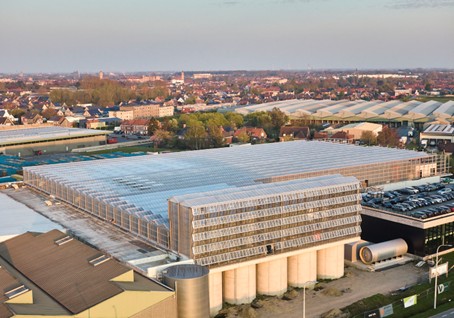
The Agrotopia research greenhouse in Roeselare.
Photo: © Agrotopia
Circular economy in greenhouse horticulture
Greenhouse horticulture is particularly well suited to the principles of the circular economy. Because the greenhouse provides a controlled environment, growers have much greater control over production processes and over the inputs and outputs of their businesses. This enables them to maximise both efficiency and sustainability by valorising residual streams and closing resource loops wherever possible. Water, nutrients and energy can all be used and reused efficiently thanks to the circular nature of greenhouse production.
Four research projects
Agrotopia's researchers are currently working on four innovative projects designed to further strengthen circular greenhouse horticulture.
1. The ZERO-WASTE project
The ZERO-WASTE approach to greenhouse fruit vegetable production focuses on minimising waste while developing more sustainable cultivation methods and creating value from residual streams.
The project encourages growers to adopt circular solutions, such as innovative biodegradable clips for supporting plant stems. At the end of the growing season, these clips no longer need to be removed but can be composted together with the crop residues, resulting in considerable labour and cost savings.
Another important aspect of the project is the search for alternatives to plastic and rockwool growing slabs, which are normally discarded after harvest. Growing media made from coconut fibres and maize fibres are currently being evaluated for their cultivation performance, reusability and compostability.
Finally, researchers are investigating which new products can be created from residual materials such as leaves and spent growing substrates.
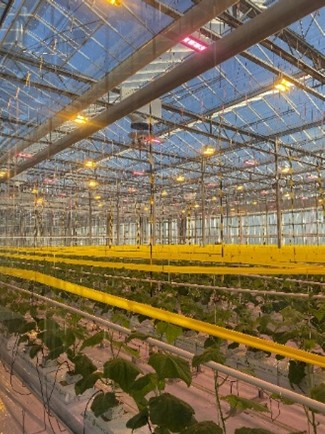
Within the ZERO-WASTE project, alternatives to plastic and rockwool growing slabs are being tested.
Photo: © Agrotopia
2. The HERMEST project
Agriculture still relies heavily on mineral fertilisers and untreated livestock manure. Nitrogen fertiliser production is highly energy-intensive, while phosphate fertilisers are derived from imported phosphate rock extracted through mining.
The HERMEST project is exploring more sustainable alternatives.
Modern nutrient recovery technologies already make it possible to produce high-quality recycled fertilisers from livestock manure. However, these products are still only used on a limited scale. Researchers are therefore developing optimal fertilisation strategies tailored to different crops.
At Agrotopia, pilot lettuce trials are currently being carried out using a mobile gutter system supplied with carefully treated biological effluent from pig farming. This produces a potassium-rich nutrient solution that feeds the plants.
Within HERMEST, researchers and growers work closely together, sharing knowledge and translating research directly into practical applications.
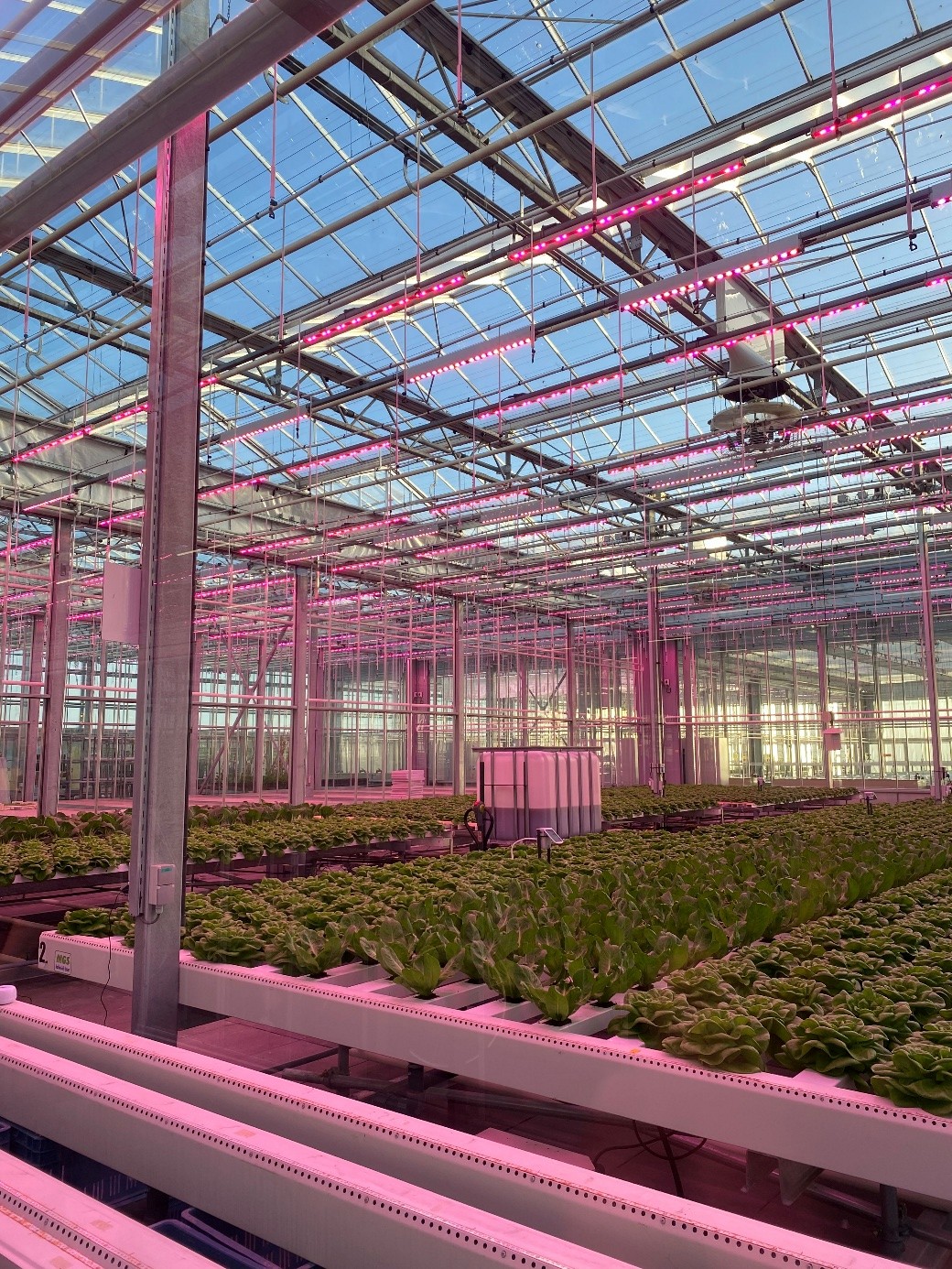
The HERMEST project focuses on the use of recycled fertilisers.
Photo: © Agrotopia
3. The OptiWAIE project
The OptiWAIE project aims to optimise water use in greenhouse horticulture by making use of alternative internal and external water sources, including reclaimed water and surface water.
Researchers are investigating how water quality affects crop production, evaluating different water treatment technologies and carrying out cost-benefit analyses to develop more sustainable water management strategies.
The project focuses primarily on greenhouse crops such as tomatoes, cucumbers and lettuce, although the findings can also be applied to other hydroponic production systems.
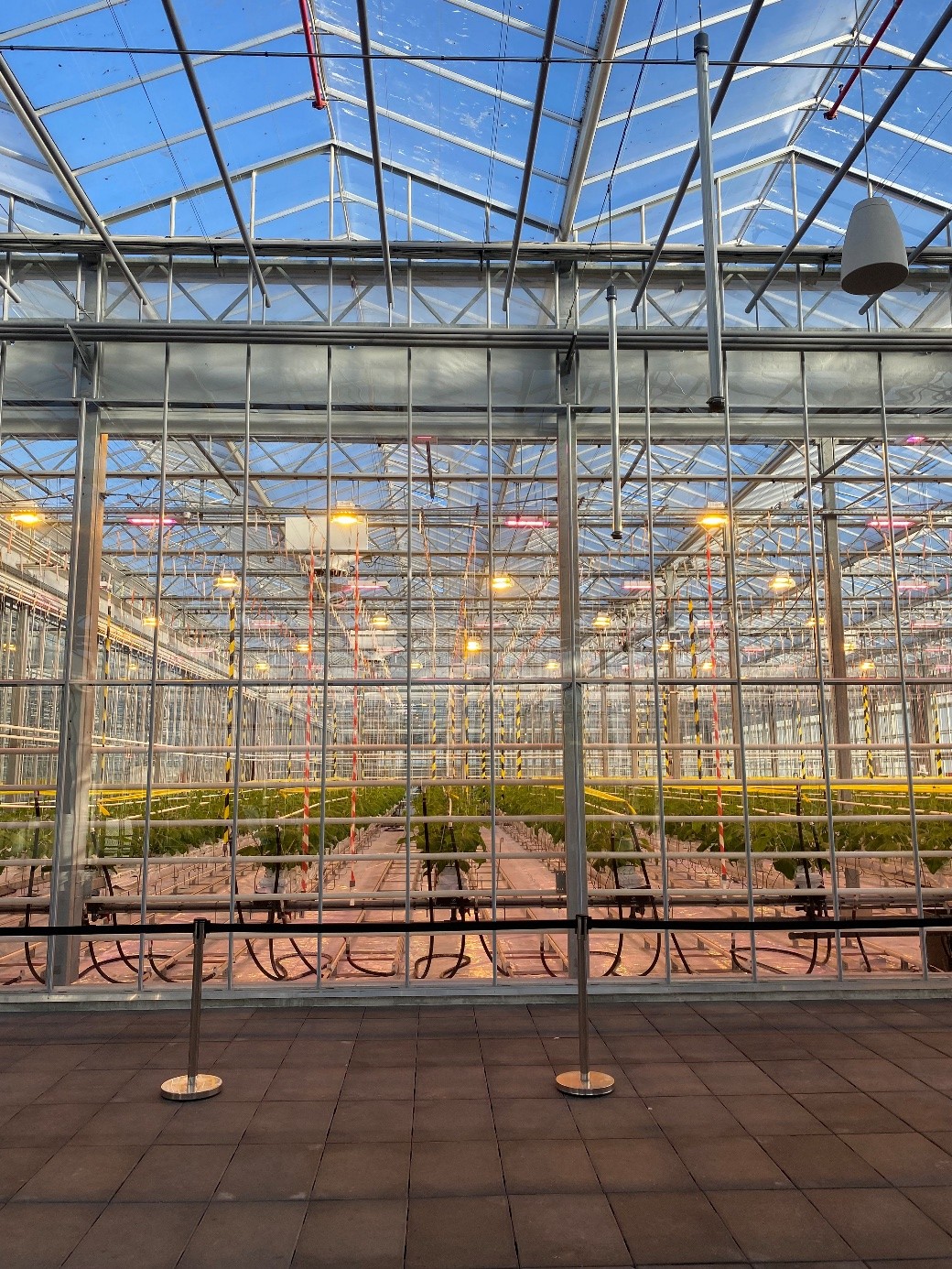
The OptiWAIE project focuses on optimising water use in greenhouse horticulture.
Photo: © Agrotopia
4. The RE-GREENHOUSE project
The RE-GREENHOUSE project aims to accelerate the transition from fossil fuels to renewable energy sources in greenhouse horticulture across North-West Europe.
Together with partners from five countries, six different renewable energy sources—including biogas and solar energy—are being evaluated through pilot installations.
The project's objective is to provide growers with a practical decision-support tool that helps them select the most suitable sustainable energy sources based on both technical and economic considerations.
RE-GREENHOUSE makes an important contribution to achieving environmental and climate objectives while strengthening the sector's resilience to geopolitical crises.
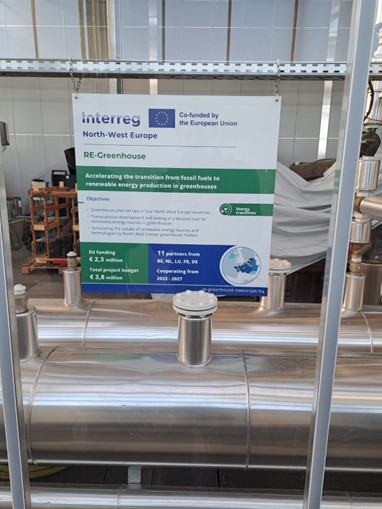
The RE-GREENHOUSE research project aims to accelerate the transition from fossil fuels to renewable energy in greenhouse horticulture.
Photo: © Agrotopia
More information about sustainability projects in Flanders is available at: www.wirpackennachhaltigkeitan.eu


Co-funded by the European Union.
The views and opinions expressed are those of the authors only and do not necessarily reflect those of the European Union or the European Research Executive Agency (REA). Neither the European Union nor the granting authority can be held responsible for them.