
Applied Research as a Driver of Innovation in Flemish Greenhouse Horticulture
For decades, Flemish greenhouse horticulture has been characterised by close collaboration between growers and research institutions. Research centres and growers work continuously together to address practical challenges faced by commercial businesses and translate them into solutions that can be readily applied in practice. This close cooperation has played a major role in strengthening both production reliability and the long-term competitiveness of the sector.
A notable example of this practice-oriented approach is the research on the Pepino Mosaic Virus (PepMV). Since the early 2000s, this highly infectious virus has caused significant quality losses in tomato production in Belgium and the Netherlands. As hygiene measures alone proved insufficient, the Vegetable Crop Research Station in Sint-Katelijne-Waver and Hoogstraten Research Centre launched a joint research project, which led to the development of an effective vaccine in 2011. This breakthrough significantly reduced economic losses and provided growers with greater certainty when planning their production.
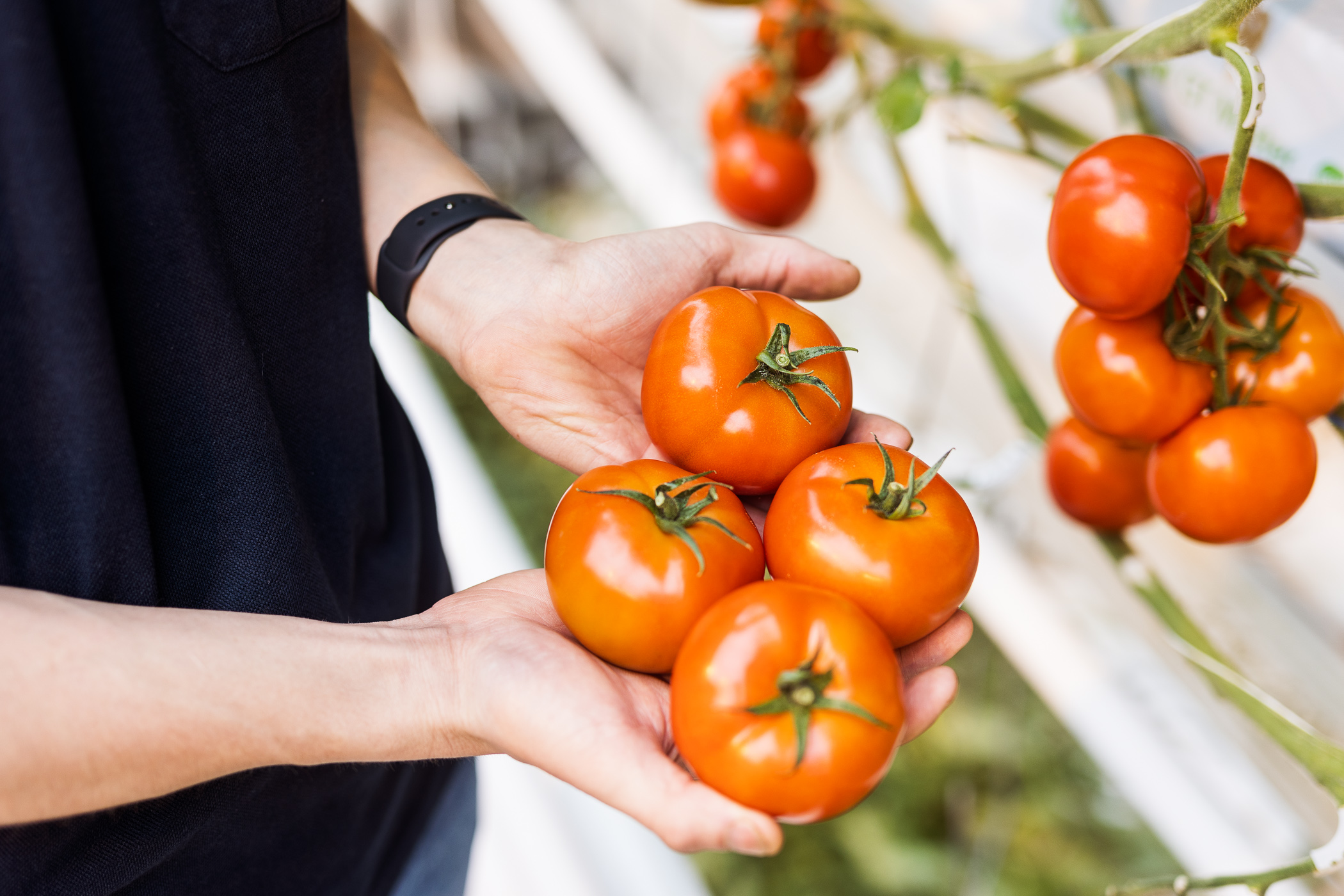
Applied research plays a key role in safeguarding plant health in tomato production.
Photo: © VLAM
While this research primarily focused on plant health, sustainability and resource efficiency have increasingly become the key priorities for modern production systems. A central role in this transition is played by Agrotopia in Roeselare, a state-of-the-art greenhouse research facility that is part of the Inagro research centre. Here, innovative production methods are developed, tested and demonstrated under commercial growing conditions.
- Within the Zero Waste project, the Vegetable Crop Research Station, Hoogstraten Research Centre and Ghent University investigated how residual streams from greenhouse horticulture can be used in a circular way. The objective was to maximise the value of plant residues, growing substrates, water and nutrients while minimising waste. Particular attention was paid to biodegradable alternatives for crop clips and twine, as well as organic growing substrates that facilitate composting and further valorisation. The project demonstrates how biodegradable materials and new value chains can generate both environmental and economic benefits.
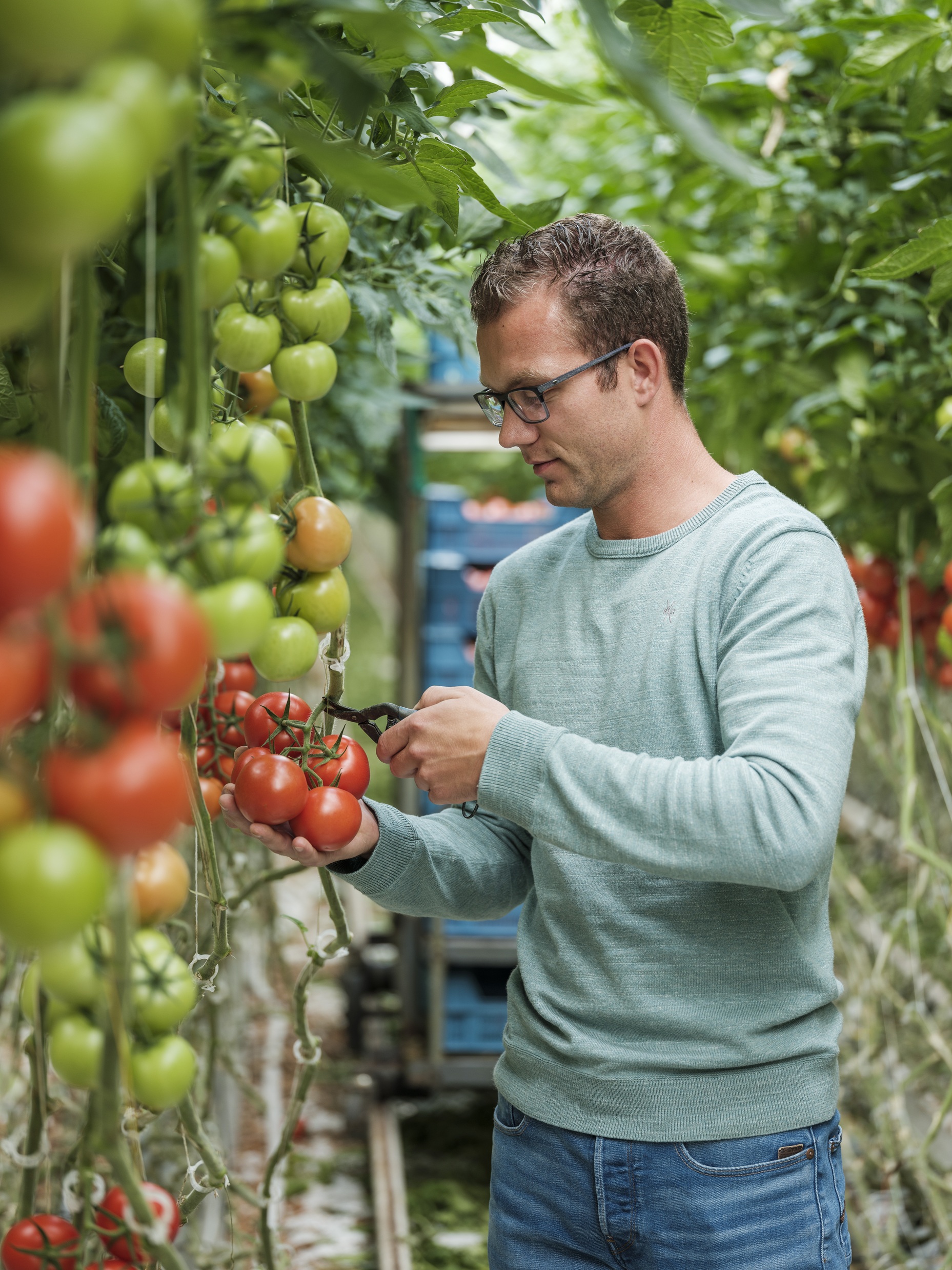
The circular use of residual streams is a key focus of current research.
Photo: © VLAM
Another forward-looking initiative is ReduVeen, a project carried out in collaboration with the Vegetable Crop Research Station and supported by the Flemish Agency for Agriculture and Sea Fisheries and the European Agricultural Fund for Rural Development (EAFRD).
The project's objective is to reduce the proportion of peat used in pressed growing blocks, as peat is increasingly being questioned because of its environmental and climate impact. Researchers are investigating whether at least 35% of the peat can be replaced by alternative materials under commercial growing conditions.
ReduVeen therefore makes an important contribution to Flanders' climate and sustainability ambitions while reducing the sector's dependence on fossil-based substrate materials.
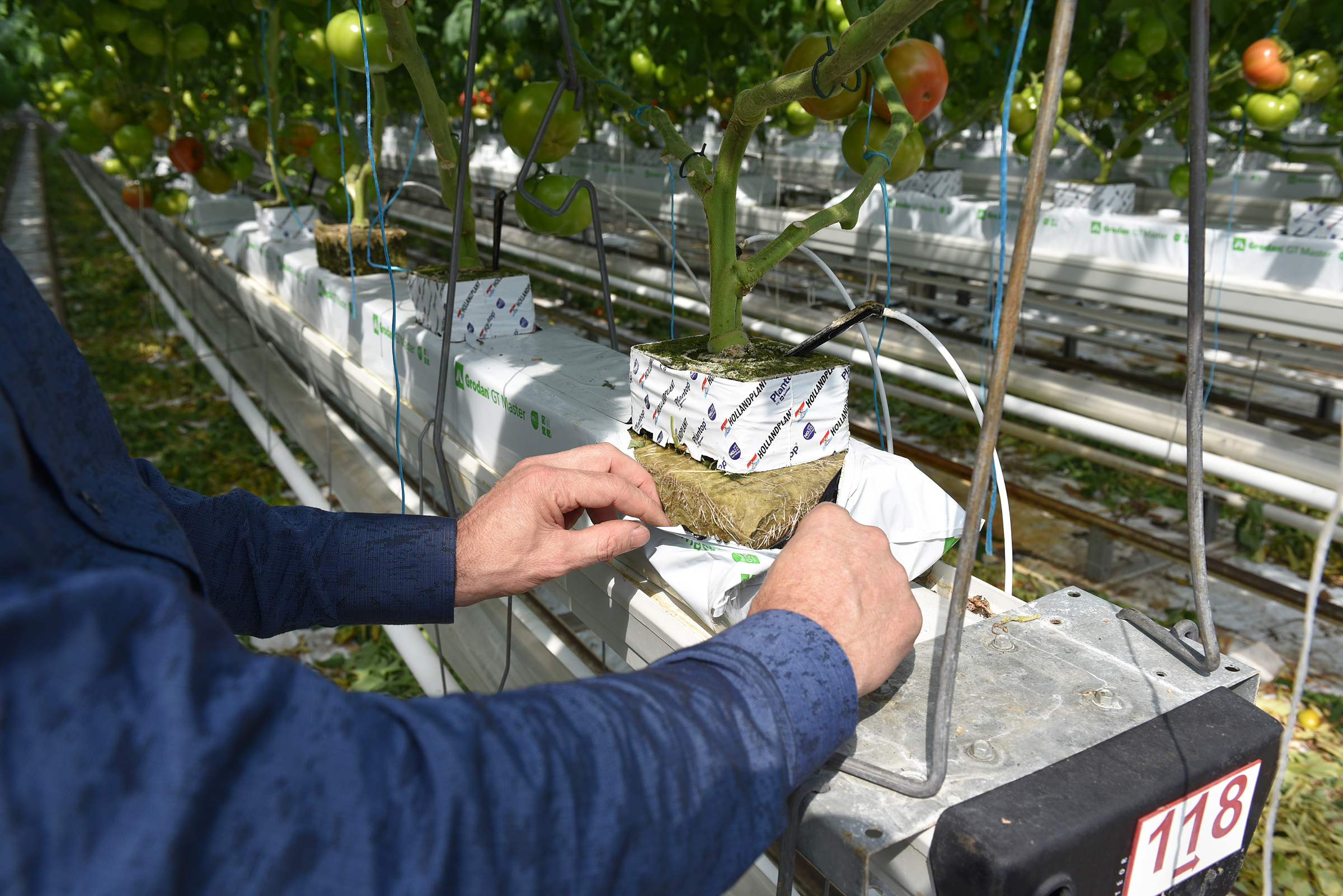
Reducing the peat content of pressed growing blocks is the focus of ongoing research.
Photo: © VLAM
Together, these examples demonstrate how Flemish research centres actively support the further development of greenhouse horticulture through applied research, with a strong emphasis on practical relevance and sustainable innovation.


Co-funded by the European Union.
The views and opinions expressed are those of the authors only and do not necessarily reflect those of the European Union or the European Research Executive Agency (REA). Neither the European Union nor the granting authority can be held responsible for them.