
GLITCH & ENERGLIK – Interreg Research Projects for Energy-Efficient and Climate-Neutral Greenhouse Horticulture
Greenhouse horticulture is a key pillar of Belgian vegetable production. In 2022, approximately 2,200 hectares of greenhouse area were under cultivation. With nearly 300,000 tonnes, tomatoes are by far the largest product group, followed by cucumbers and sweet peppers with around 35,000 tonnes each, and head lettuce with approximately 25,000 tonnes.
Climate change and high energy prices present major challenges for the sector. In close collaboration with research institutions, continuous efforts are therefore being made to optimise greenhouse cultivation.
GLITCH
With support from the European Union, the Interreg project GLITCH was launched. GLITCH stands for the Dutch phrase "GLastuinbouw Innoveert door Co-creatie met koolstofarme Hightech", which translates as Greenhouse horticulture innovates through co-creation with low-carbon high-tech solutions. Between 2018 and 2021, thirteen horticultural companies and research centres from Belgium and the Netherlands participated in the project. The focus was on energy-saving measures in greenhouse horticulture.
One of the key research topics was the potential of energy screens. These screens help reduce heat losses inside the greenhouse. Day and night screens fitted with special films can significantly lower both energy consumption and CO₂ emissions.
"By combining day and night screens with sophisticated screen and climate control, energy savings of up to 62% can be achieved in sweet pepper cultivation: 40% during the day and 79% at night, without any loss of production. In tomato cultivation, the use of night screens combined with an adapted cultivation strategy resulted in total energy savings of 41%, although this was accompanied by a reduction in yield," explains Marlies Huysmans, fruit vegetable researcher at testing center Hoogstraten.
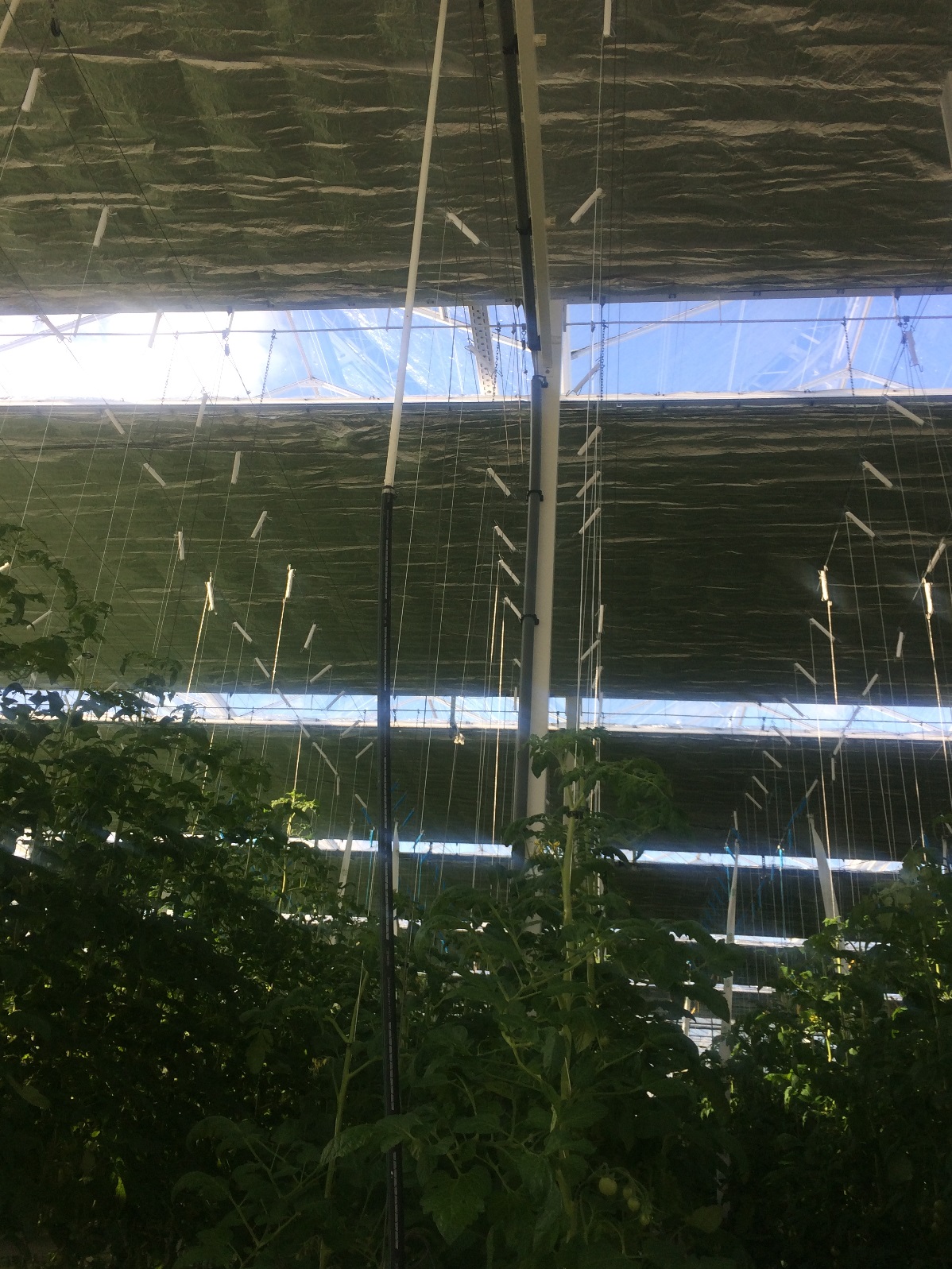
The use of night screens combined with an adapted cultivation strategy resulted in overall energy savings of 41% in tomato production.
Foto: © Consortium Energlik
Improved insulation may lead to the accumulation of humid air inside the greenhouse. Traditionally, excess humidity is removed through window ventilation. To minimise the associated heat losses, research focuses on active dehumidification systems that recover the energy contained in evaporated moisture.
For this purpose, a vapour heat pump has been developed, consisting of a heat exchanger and an evaporator. The heat exchanger uses a saline solution to remove moisture from the air, converting humidity from the greenhouse air into usable heat. The diluted saline solution is then reconcentrated, creating a closed-loop system.
GLITCH also investigated different lighting technologies.
"Some growers still rely on high-pressure sodium (HPS or SON-T) lighting, even though research has shown that switching to LED lighting can reduce electricity consumption in tomato cultivation by 13 to 38%. This represents substantial savings, particularly during periods of high energy prices. Energy efficiency can be improved even further by making use of residual heat from heating installations or industrial processes, geothermal energy or heat pumps," says Lieve Wittemans, tomato researcher at Viaverda.
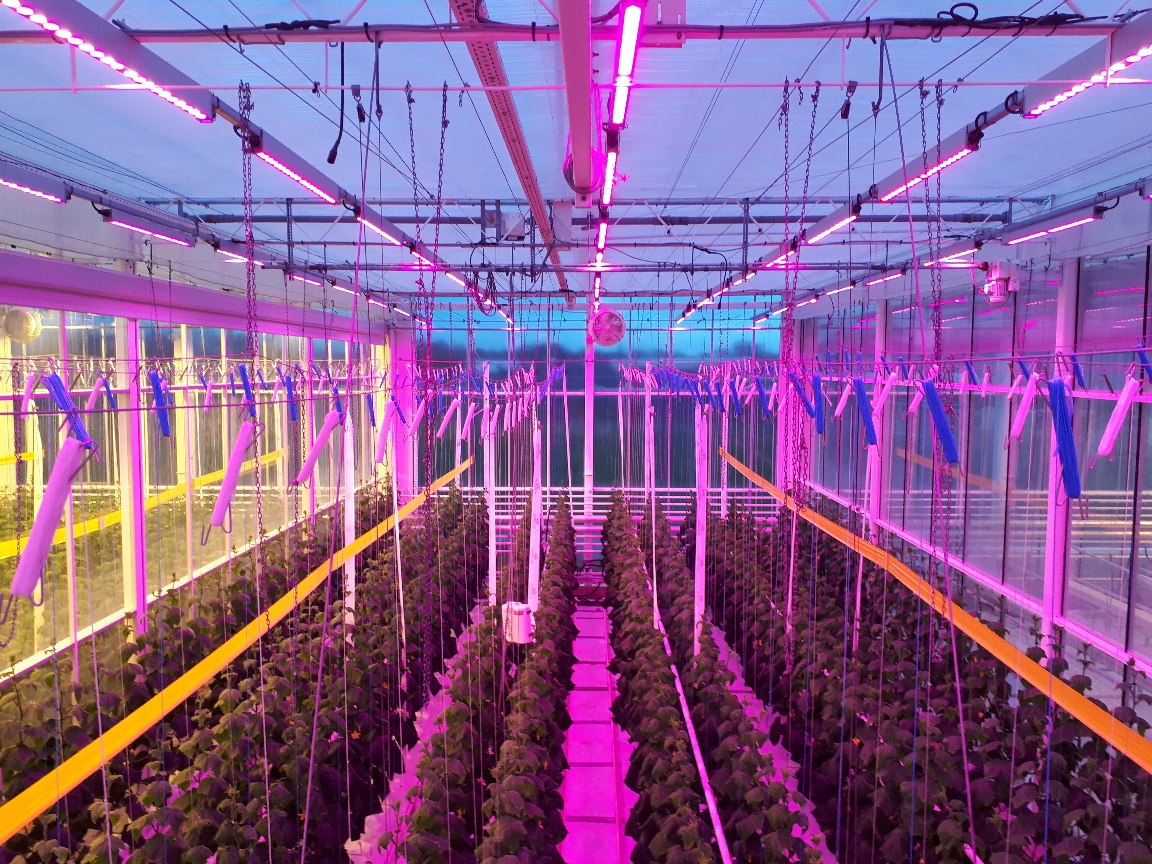
The use of LED lighting significantly reduces electricity consumption in greenhouse vegetable production.
Foto: © Consortium Energlik
ENERGLIK
The findings of GLITCH now form the basis of the Flemish-Dutch Interreg follow-up project ENERGLIK, which runs from 2023 to 2026 and is also co-funded by the European Union.
ENERGLIK stands for ENERgy-efficient Greenhouse Horticulture, Innovation and Climate Neutrality. Eleven research institutes and companies from Belgium and the Netherlands participate in the project, including testing center Hoogstraten, testing station for vegetable cultivation, Thomas More University of Applied Sciences, Ghent University, ILVO, Maastricht University and Wageningen University & Research (WUR).
The overall objective is to demonstrate that climate neutrality and economic viability can go hand in hand in greenhouse horticulture. The ENERGLIK project focuses on four key innovation themes.
Further development of energy-saving day and night screens
The aim is to develop practical, highly energy-efficient screening systems for commercial greenhouse production. Marlies Huysmans of Proefcentrum Hoogstraten explains:"Research into energy-balancing day and night screens is already well advanced, but both the films and the screens themselves still need further optimisation. That is why we have established a technical working group involving manufacturers to support the continued development of screens and films."
The more closed cultivation system also requires new crop management strategies and adjustments to climate control software. A dedicated technical working group has therefore been established for this purpose as well.
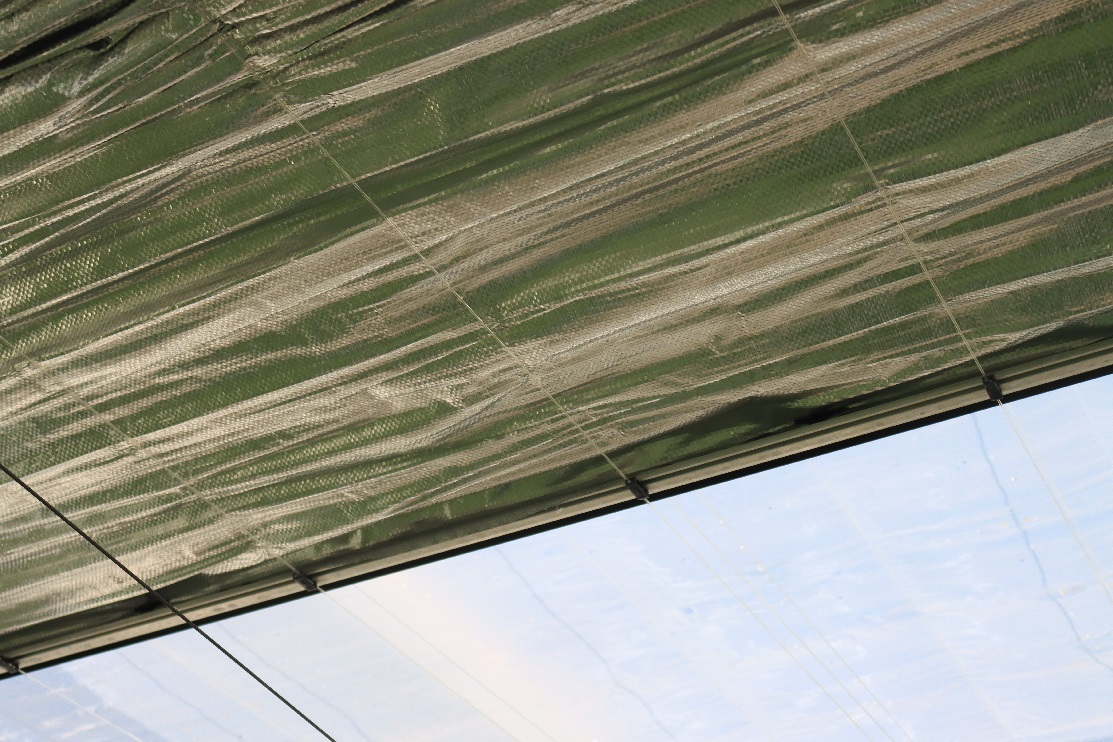
Night screens fitted with special films help reduce heat losses inside the greenhouse.
Foto: © Consortium Energlik
Optimising greenhouse air dehumidification
Improving dehumidification systems is another continuation of the GLITCH research. According to Viaverda researcher Evelien Rosiers:"Several dehumidification systems already exist. Within ENERGLIK, three of them will be further developed. The most innovative is a vapour heat pump with a heat and mass exchanger, developed by Ghent University and ILVO. Humid greenhouse air is drawn through ducts and sprayed with a saline solution that extracts moisture from the air. The dry air and the recovered heat are then blown back into the greenhouse. The diluted saline solution is subsequently reconcentrated by the vapour heat pump so it can be reused. Alongside this innovative system, two commercially available dehumidification systems will also be tested."
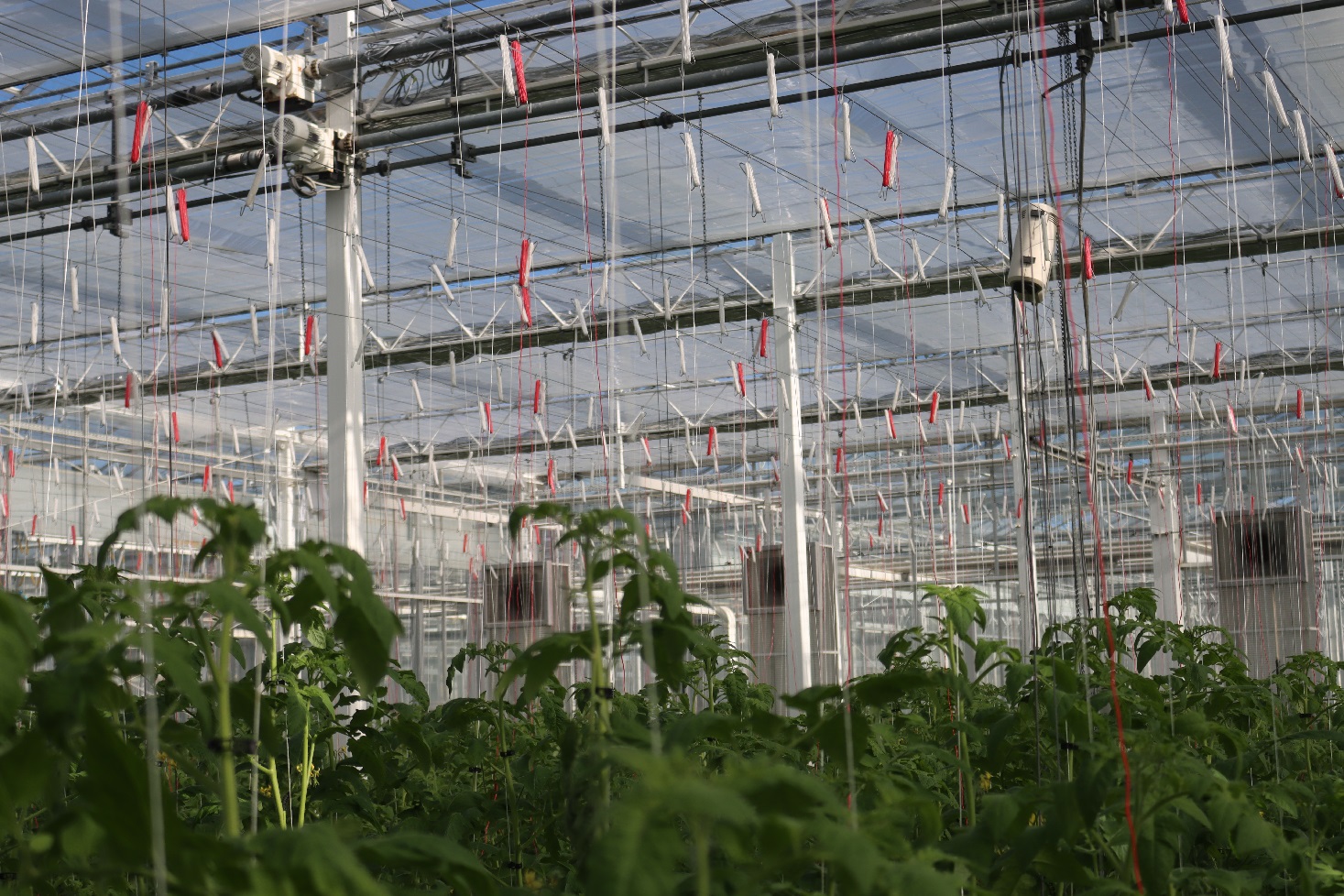
Humid greenhouse air is drawn through ducts and sprayed with a saline solution, which extracts moisture from the air.
Foto: © Consortium Energlik
Capturing, purifying and storing CO₂ from flue gases for just-in-time dosing
Within this project, ENERGLIK focuses on reducing CO₂ emissions. Fjo De Ridder of Thomas More explains:"CO₂, a by-product of combustion in the heating system, is supplied to the greenhouse whenever it is available. During summer, for example, only a small amount of heat is required in the morning to prevent condensation on the crop, whereas plants require CO₂ throughout the day. If the CO₂ released during heat generation could be stored, it could be dosed whenever the crop needs it."
Since flue gas typically contains only 5–10% CO₂, storing it directly is inefficient. The CO₂ must therefore first be separated from the flue gas and concentrated to approximately 70–80% before storage. The project aims to develop an affordable installation capable of doing so.
In addition, further purification of the flue gas is being investigated.
"We aim to remove soot particles, ethylene, NOx and SOx to obtain the purest possible CO₂. Experience has shown that purchased pure CO₂ often results in higher yields than CO₂ recovered from flue gases. Certain compounds, such as ethylene, can negatively affect crop performance by accelerating flower abortion. Consequently, not only CO₂ concentration but also gas purification is a key objective of this project."
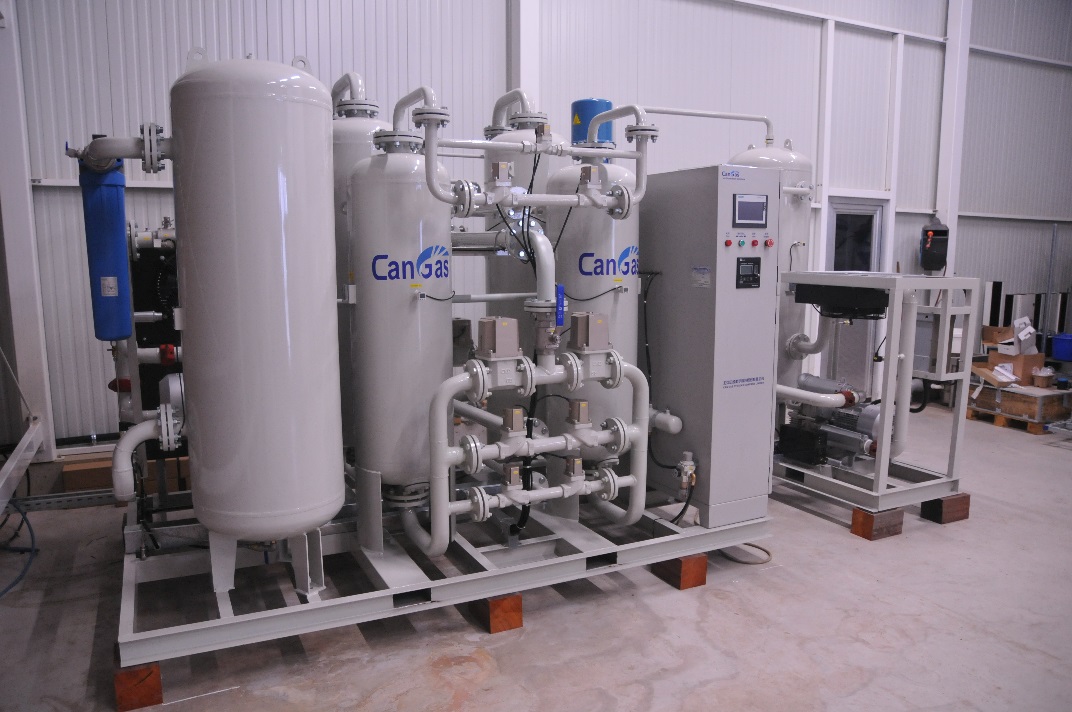
Besides increasing concentration, further purification of the CO₂ mixture is one of the project's key objectives.
Foto: © Consortium Energlik
Developing and optimising sensor technology for monitoring fungal pressure
Maastricht University is developing an entirely new project within ENERGLIK that focuses on sensors capable of measuring fungal spore pressure in greenhouse crops. Marlies Huysmans explains:
"Growing crops with reduced ventilation is more energy-efficient and improves CO₂ uptake by the plants. However, it also leads to higher humidity levels and therefore increased fungal pressure. Maastricht University is developing sensors capable of measuring airborne spore concentrations."
Three sensors are currently being developed, each targeting a specific fungal pathogen:
- Fusarium oxysporum (Fusarium wilt) in sweet peppers;
- Botrytis cinerea (grey mould) in tomatoes;
- Didymella bryoniae (gummy stem blight) in cucumbers.
"It is unlikely that fully market-ready sensors will be available by the end of the project. Our objective is to present a working prototype," says Huysmans.
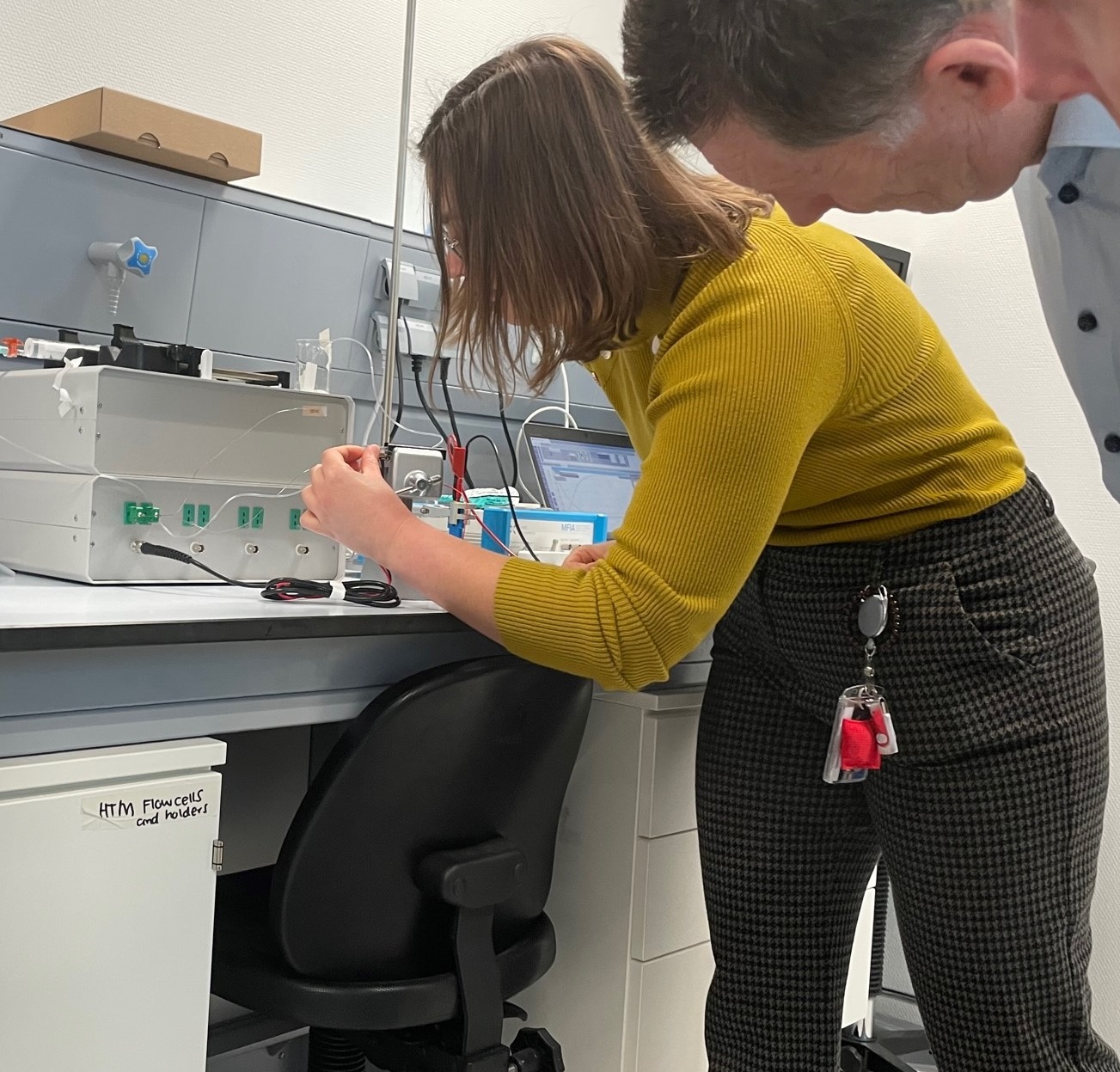
Maastricht University is developing sensors to monitor fungal spore pressure in greenhouse crops.
Foto: © Consortium Energlik
Demonstration activities form a crucial part of the ENERGLIK project. During the first project year, the focus remains on fundamental research within the four innovation themes. In the second growing season, attention shifts towards demonstration trials at the participating research centres. During the third project year, the consortium will also organise demonstrations at a commercial pilot greenhouse. Growers will receive practical guidelines on how to implement the developed technologies.
The final phase of ENERGLIK will evaluate the outcomes of all four innovation projects.
Lien Bosmans of Proefcentrum Hoogstraten concludes:
"At that stage, we will present the future prospects for more climate-neutral greenhouse horticulture. Our ambition is to identify low-carbon, energy-efficient cultivation techniques that will help pave the way towards climate-neutral greenhouse production by 2050."
More information: www.wirpackennachhaltigkeitan.eu


Co-funded by the European Union.
The views and opinions expressed are those of the authors only and do not necessarily reflect those of the European Union or the European Research Executive Agency (REA). Neither the European Union nor the granting authority can be held responsible for them.