
Flanders Invests in Innovation for Energy-Efficient Greenhouse Sweet Pepper Production
Rising energy and operating costs are placing increasing pressure on Flemish greenhouse horticulture. High natural gas prices and the rising cost of mineral fertilisers particularly affect energy-intensive crops, reinforcing the need for sustainable production methods.
At the same time, the energy transition targets set by the Flemish Agency for Agriculture and Sea Fisheries for 2030 and 2050 require a substantial reduction in CO₂ emissions and a lower dependence on fossil fuels.
Current research projects demonstrate that the technological transformation of greenhouse horticulture is already well underway. By intelligently combining energy efficiency, circular production principles and digital climate control, growers can simultaneously reduce both emissions and production costs. The result is a range of practical innovations that strengthen business resilience while paving the way towards a climate-friendly and competitive future.
The Flemish-Dutch Interreg project ENERGLIK is developing practical solutions to significantly reduce natural gas consumption in greenhouses without compromising yields or profitability. Building on the results of the earlier GLITCH project, ENERGLIK focuses on energy-efficient cultivation techniques for modern greenhouse horticulture. The Flemish partners include the Vegetable Cultivation Research Station, the Hoogstraten Research Centre, Thomas More University of Applied Sciences, and the research institute ILVO.
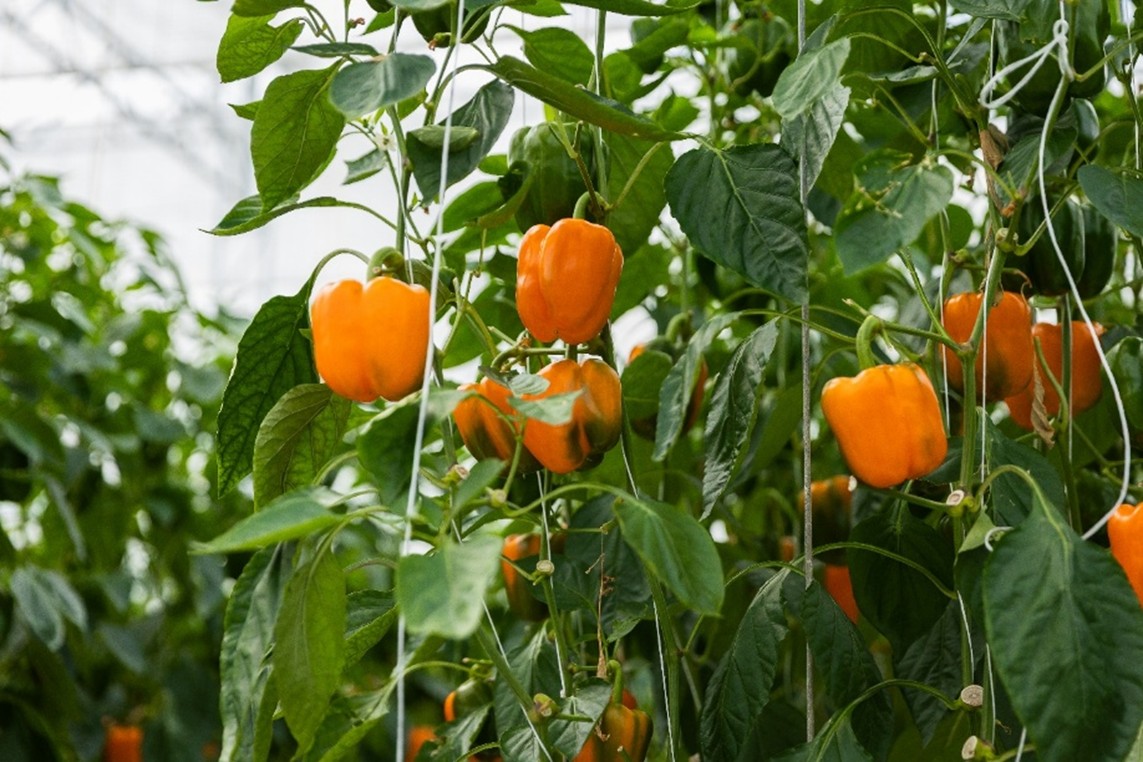
Sweet peppers from Flanders are an excellent example of modern, energy-efficient greenhouse production.
Photo: © VLAM
One of the project's key innovations is the capture of CO₂ from the flue gases of combined heat and power (CHP) units. After purification, the recovered CO₂ is reintroduced into the greenhouse, improving both crop performance and production efficiency. This approach is particularly effective during warmer periods, when heating demand is low and natural gas consumption can therefore be significantly reduced.
Further innovations focus on the use of energy screens, which are deployed during both daytime and night-time. These screens combine excellent thermal insulation with high light transmission, reducing heat losses while maintaining optimal growing conditions.
Researchers are also further developing active dehumidification systems based on vapour heat pumps. These systems allow precise humidity control, reduce the risk of fungal diseases and minimise unnecessary heat losses, as greenhouse vents can remain closed for longer periods.
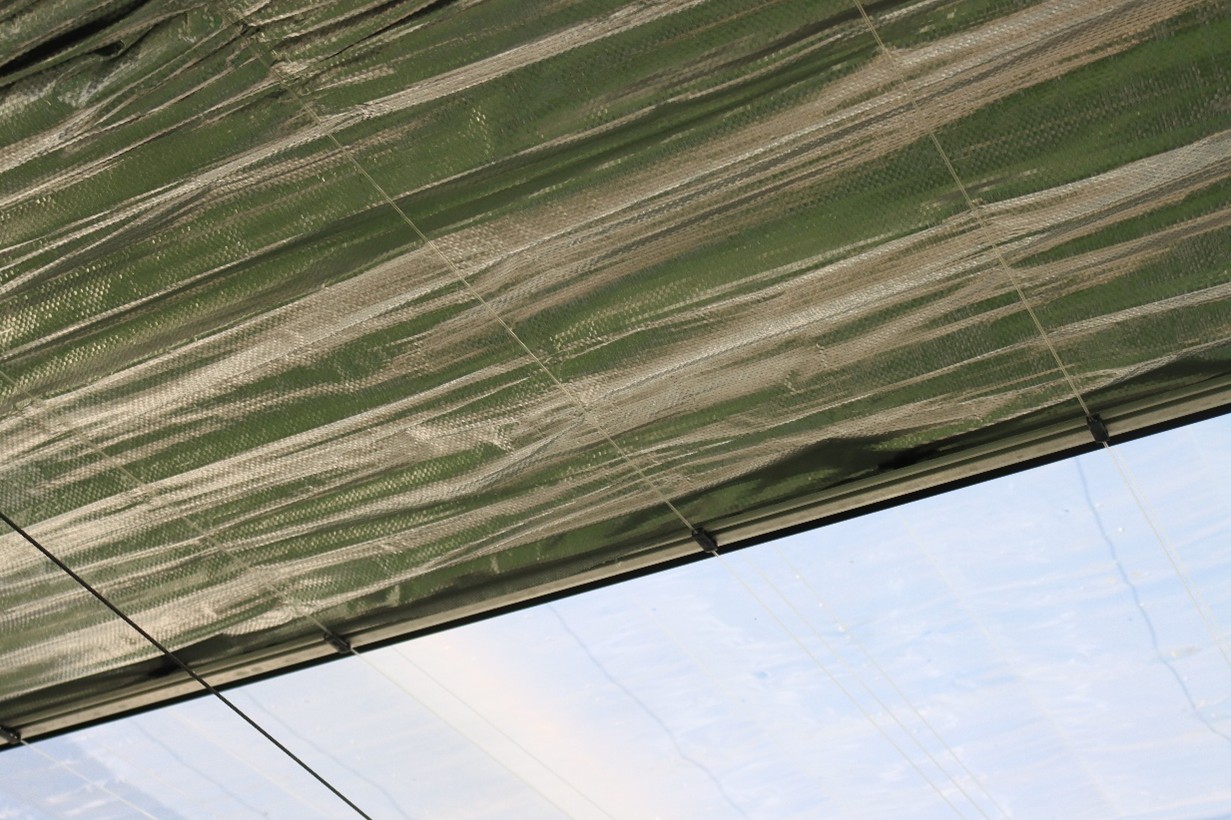
Night screens fitted with specialised films help reduce heat losses in greenhouses.
Photo: © Consortium Energlik
Advanced sensor technologies provide continuous monitoring of greenhouse climate conditions. By detecting airborne fungal spores at an early stage, growers can assess disease pressure in real time and fine-tune climate management accordingly.
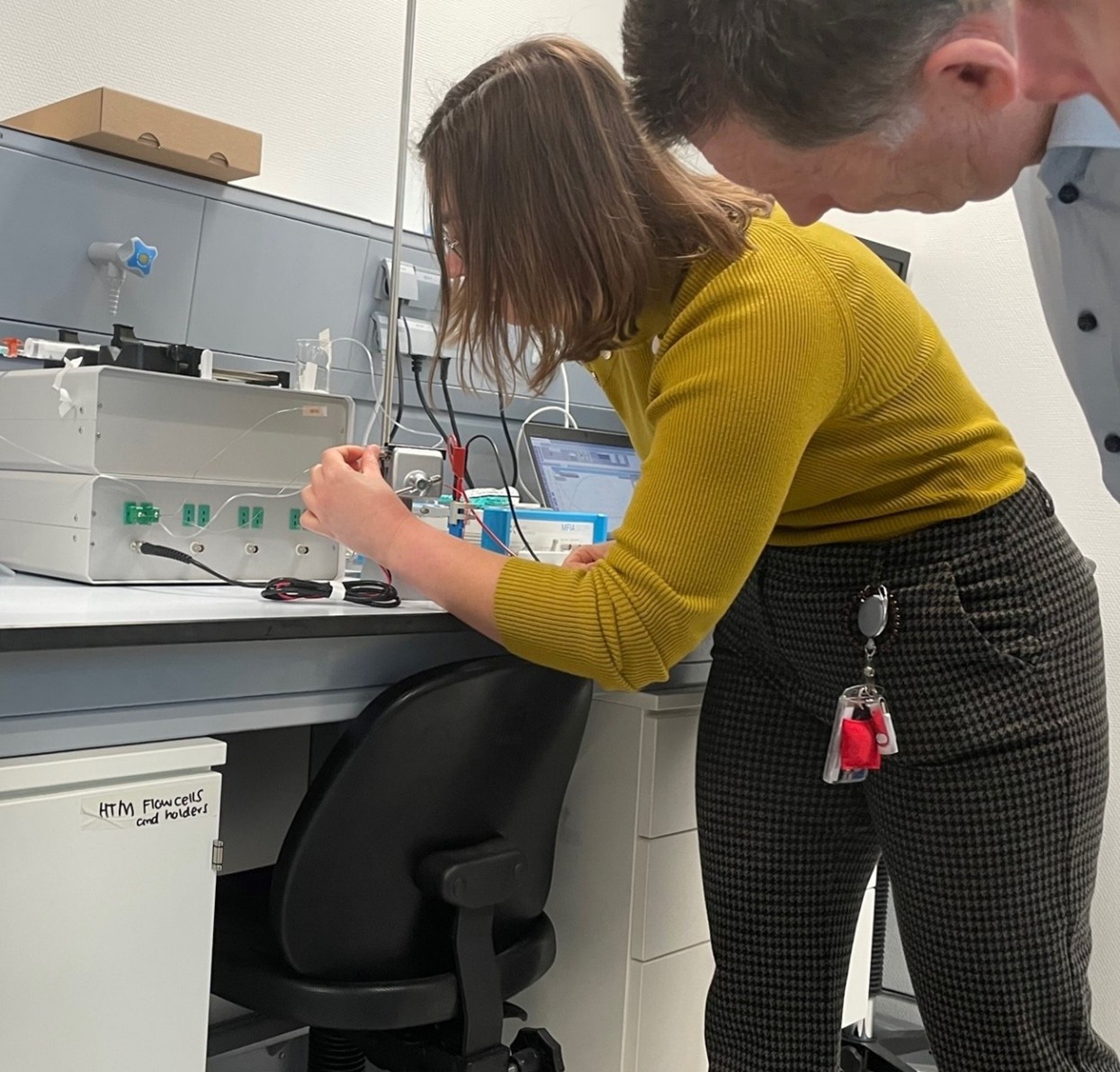
Within the ENERGLIK project, Maastricht University is developing sensors capable of measuring airborne fungal spore concentrations.
Photo: © Consortium Energlik
At the same time, the HERMEST project is investigating how recovered nutrients can be integrated into greenhouse production. The objective is to reduce the need for mineral fertilisers—and therefore indirectly reduce dependence on natural gas—while lowering production costs for growers.
The technology is currently being tested in tomato production but has the potential to be applied across a wide range of protected crops.
The results are encouraging. Technological innovation is making it increasingly feasible to reduce dependence on natural gas in greenhouse horticulture. These developments offer technically viable and economically sound prospects for a more sustainable future for Flemish greenhouse production.
More information: Nachhaltigkeit geht alle an | Obst und Gemüse aus Flandern
Your opinion matters!
👉 Take part in our short survey on sustainability in vegetable production:
Survey: https://surveys.profactsresearch.com/wix/p792213200878.aspx?Source=13 .
Thank you for your participation!


Co-funded by the European Union.
The views and opinions expressed are those of the authors only and do not necessarily reflect those of the European Union or the European Research Executive Agency (REA). Neither the European Union nor the granting authority can be held responsible for them.